
Pediatric Eye Exams in Midlothian, TX
At Texas State Optical, pediatric eye exams help parents gain a clearer understanding of their child's vision, eye health, and visual development so they can support success both inside and outside the classroom.
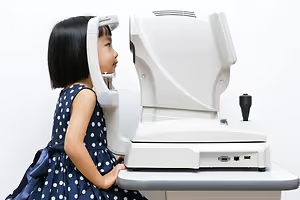
Children Do Not Always Know They Have a Vision Problem
Many parents expect their child to mention a vision problem if something is wrong. In reality, children often assume everyone sees the world the same way they do. If blurry vision develops gradually, they may not realize anything has changed.
Routine pediatric eye exams help identify concerns before they begin affecting learning, sports, reading, and everyday activities. Early detection gives children the best opportunity to develop strong visual skills and receive care when needed.
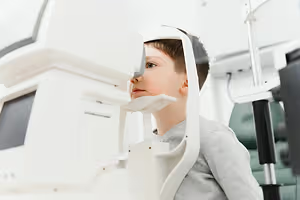
Signs Your Child May Need an Eye Exam
Children may not always communicate that they are having difficulty seeing. Parents should watch for signs that may indicate a vision concern, including:
- Squinting frequently
- Sitting very close to screens or televisions
- Holding books too close while reading
- Frequent eye rubbing
- Complaints of headaches
- Difficulty concentrating during reading
- Losing their place while reading
- Avoiding close-up activities
- Declining academic performance
If any of these signs sound familiar, an eye exam can help determine whether vision may be contributing to the problem.
What Happens During a Pediatric Eye Exam?
A pediatric eye exam evaluates much more than whether your child needs glasses. Our doctors use age-appropriate testing methods to assess how your child's eyes function, work together, and develop over time.
After the examination, your doctor will review the results with you, answer questions, and discuss any recommendations that may help support your child's vision and development.
We assess how clearly your child sees at near and far distances, how well their eyes focus, and how effectively they use both eyes together. These skills play an important role in reading, classroom learning, sports, and everyday activities.
We look for signs of nearsightedness, farsightedness, astigmatism, and other vision changes that may be making it harder for your child to see the board at school, complete schoolwork comfortably, or participate confidently in daily activities.
We evaluate how your child's eyes move, track, and work together. Difficulties in these areas can sometimes contribute to reading challenges, losing place while reading, eye strain, headaches, or difficulty maintaining focus during visual tasks.
We examine the overall health and development of your child's eyes and screen for conditions that may affect vision now or in the future. Many eye health concerns develop without obvious symptoms, which is why routine eye exams are so important.
After the examination, your eye doctor will review the results with you, answer questions, and discuss any recommendations that may help support your child's vision and development.
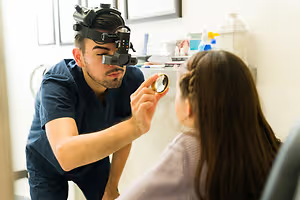

Myopia Screening & Early Detection
Nearsightedness, also known as myopia, has become increasingly common among children. As myopia progresses, distant objects become more difficult to see clearly, often leading to stronger prescriptions over time.
Routine eye exams allow our doctors to monitor changes in your child's vision and identify early signs of myopia. If appropriate, we may discuss myopia management options designed to help slow progression and support long-term eye health.
Give Your Child a Strong Foundation for Lifelong Vision
Healthy vision supports learning, development, confidence, and everyday experiences. Schedule a pediatric eye exam at Texas State Optical to gain a better understanding of your child's vision and help set them up for success both in and out of the classroom.